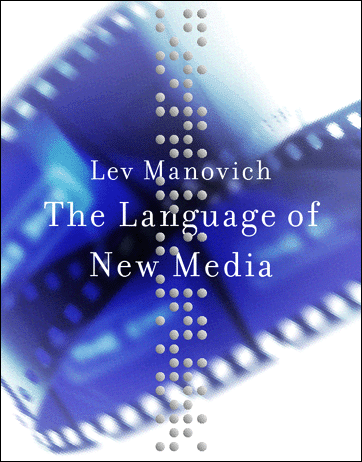
The language of new media
Chapter 1
What is new media?
In this chapter lev manovich identifies different aspects of media looking at where media converts into new media , exploring the understanding and aspects of new media stating that there is a fine line between the two as a identical image can be categorized differently, for example “photographs which are put on a CD-ROM and require a computer to view them are considered to be new media; the same photographs printed as a book are not.” A conclusion is drawn that new media does not have an exact definition linked to it.
The chapter discusses developments throughout time within media technology from the 1800s to present day, identifying changes in photographs, illustrations, graphics, audio, radio, television, movies, computers, computer software, interactive games, the internet, digital composing and animation. While discussing these factors he tries to distinguish which of these factors are new media and which are media. He does this by discussing differences between media and new media.
He also discusses the relationship between social factors and how new media reflects social logic, relating it to the idea that “new media technology acts as the most perfect realization of the utopia of an ideal society composed from unique individuals.”
After initially being put off the book by the amount of technical vocabulary being used, I came to have a greater understanding of new media. I would recommend the book to anyone studying a media course or anyone who has a general interest in the subject.
Chapter 1
What is new media?
In this chapter lev manovich identifies different aspects of media looking at where media converts into new media , exploring the understanding and aspects of new media stating that there is a fine line between the two as a identical image can be categorized differently, for example “photographs which are put on a CD-ROM and require a computer to view them are considered to be new media; the same photographs printed as a book are not.” A conclusion is drawn that new media does not have an exact definition linked to it.
The chapter discusses developments throughout time within media technology from the 1800s to present day, identifying changes in photographs, illustrations, graphics, audio, radio, television, movies, computers, computer software, interactive games, the internet, digital composing and animation. While discussing these factors he tries to distinguish which of these factors are new media and which are media. He does this by discussing differences between media and new media.
He also discusses the relationship between social factors and how new media reflects social logic, relating it to the idea that “new media technology acts as the most perfect realization of the utopia of an ideal society composed from unique individuals.”
After initially being put off the book by the amount of technical vocabulary being used, I came to have a greater understanding of new media. I would recommend the book to anyone studying a media course or anyone who has a general interest in the subject.


 RSS Feed (xml)
No comments:
Post a Comment